Learn to Drive Syllabus – Suburbia and Beyond

Part 1: here. Part 2: here. Suburban practice: 30-45mph streets Goals: Be able to drive to (and park at) Trader Joe’s then Metropolitan Market and get back home. Continue building good habits, two-way communication with parental unit in right seat Relatively simple drive to there, some complexities coming back. Scanning and naming things to keep an eye on (e.g., pedestrians looking like they may cross, lights about to change, etc.) Lane changes. Left and right turns, signaling. An example of a multi-lane left turn; there are no lane dots to assist. ...

July 12, 2022 · wt8p

Learn to Drive Syllabus: Neighborhood

(A belated followup to Part 1. Part 3 is here.) Neighborhood Practice: 25mph streets Goals: Back out of and pull into our driveway. Complete point-to-point drives in a gentle environment, build good habits – speed control, scanning, and learning to recognize potential issues. Two-way communication with parental unit in right seat. For example, when I say stop, you need to stop right away. Otherwise, I’ll suggest things like “let’s pull over ahead” or “right turn at the next traffic light.” I need you to articulate things you see and actions you’re about to take (e.g., “I see a child on a bicycle weaving; a pedestrian is about to enter the crosswalk, so I will plan on yielding.”). If you don’t do that, I will assume you’re unaware of the issue and will point it out with varying degrees of subtlety. Locations: Klahanie Blvd – This is a wide road with ample shoulder, traffic calming devices, and pedestrian crosswalks. The speed limit is 25mph and visibility is excellent … once you’re off our street. Neighborhood beginner level. Source: Google Street View ...

June 21, 2022 · wt8p

Screws

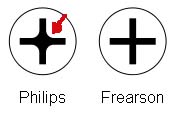
[From mid-2008] My dishwasher’s been making a bad grinding noise that, I think, is the remnant of a broken coffee cup sloshing around in the sprayer assembly. I noticed the screws holding this on are the TORX shape. This got me wondering about the type of screws available and what their trade-offs were. Enjoy! The flathead (or “slotted”) screw is an old design, but suffers two shortfalls: it’s hard to center and it’s too easy to apply too much torque, causing the screwdriver blade to pop out and destroy the head. Thus, it’s used primarily in wood products assembled by hand. ...

August 26, 2021 · wt8p

Learning to Drive Syllabus, Parking Lot

I will be teaching my adult children how to drive and found it helpful to cobble together a syllabus of activities. This will be in multiple phases, starting with … a parking lot. Part 2 is here. Part 3 is here. Parking Lot: Goals: Use and feel of steering inputs, mirrors and other controls. Car gauges and lights. Learn how the car handles at different slow speeds. Parking. Basic turns and navigation around stationary objects. Locations: Sammamish Park and Ride ...

January 15, 2021 · wt8p

Nutrition Course External References

The Cholesterol Nuclear Option. Source: http://imgur.com/gallery/V2dtI Harvard Health Letter Spreading your way to lower cholesterol? Week 3: Diabetes Defining and Diagnosing Diabetes American Diabetes Association, Standards of Medical Care in Diabetes 2012 MedlinePlus – Diabetes, Diabetes Interactive Tutorial International Diabetes Federation Physical Activity and Weight in Diabetes NIH, Diabetes Prevention Program CDC – Prevent Diabetes WHO – The Cost of Diabetes National Diabetes Information Clearinghouse – What I need to know about Physical Activity and Diabetes Meal Planning for Diabetes ...

March 17, 2013 · wt8p

Dolphin Kick

When I first heard someone mention the term dolphin kick, I thought it was a reference to the 1980s Patrick Duffy show, Man from Atlantis. The BBC says the dolphin kick “replaces a standard underwater leg kick with a whipping motion that minimizes water resistance.”1 It’s a little easier to make sense of this if you watch the video. Suffice to say, if it’s done correctly, as has been used by Michael Phelps[3,5], it confers an advantage to the swimmer. ...

February 8, 2011 · wt8p

RFID 101

I don’t watch much television , but when I do, it’s because my Tivo’s found something cool. Like: last night’s introduction to RFIDs by Dr. Chris Diorio, chairman and CEO of Impinj[5]. His presentation is available online1, so I will just summarize some of the things I learned. Who wants them? Business! Among the benefits: For the supplier, RFIDs provide a way to track a product through its complete lifecycle. ...

March 26, 2010 · wt8p

Pasta puzzle

I’ve been having a lot of fun reading “How to Fossilize Your Hamster“[1], an entertaining and enlightening collection of quirky science questions and experiments one can do to observe the the principles. It’s very conversationally written with abundant humor. For example, in answering the best way to get ketchup out of the bottle, where they detail seven methods to “exploit the thixotropic nature of ketchup,” they begin with: “WHAT DO I NEED? ...

March 13, 2008 · wt8p

Benford’s Law

I was going through Statistics Hacks and came across Benford’s Law, which states that in naturally occurring numerical data, the distribution of the first, non-zero significant digit follows a logarithmic probability distribution described as: P(D1 = d) = log10 (1 + 1/d) In other words, first number is much more likely going to be a 1 than it is a 9. The pretty graph to the right shows the likely occurrence of the first digit. It’s counter-intuitive, as one would assume the digits would be uniformly distributed. However, it’s been observed in a variety of areas like multiples of numbers2, blackbody radiation, physical constants, area of rivers, population and New York Times front pages[9]. ...

March 9, 2008 · wt8p

Inattentional blindness

Today’s keynote speaker, Daniel Simons, talked about inattentional blindness, the inability to perceive features in a visual scene you’re not paying attention to. It’s used in movies. For example, in The Matrix, the scene in which Neo and Morpheus first spar Kung-Fu style, there’s a stunt double for Keanu. Unless you’re looking for a tall Asian guy doing flips, you’ll perceive it as Neo opening a can of whoop-ass. Simons’ first example was a powerpoint “card trick” where he presents five face cards. A person in the audience secretly picks one. The presenter then shows the next slide and the card’s no longer there – magic! Try it here. In an especially funny video, he had someone ask a stranger for directions. As the stranger is explaining, confederates carrying a large box go between the two and they swap out the original requester with another person. The new person was 3″ taller, different color/more hair, Brooklyn accent at least an octave lower. In nearly all cases, the stranger kept trying to help. They did another, similar one where someone lined up for an experiment and filled out a consent form. In the middle of a sentence, the person behind the desk ducked down, as if to pick something, then another person stood up and resumed the conversation. The person was handed back their consent form and asked if they noticed anything. Nearly all did not. I failed most of the tests given, but surprisingly did okay in this example only because I didn’t hear the original directions (count the number of times the balls were passed around). Instead, I was focused on the quirky way the players were moving around. The point was that one’s memory is busy storing what it thinks is most the relevant information. In the first switcharoo case, it’s the directions. In the second, it’s filling out the form. Conversely, you’re less likely to pay attention to what you don’t consider relevant, like what the person giving the directions looks like. Interestingly, an issue autistic people have is that they aren’t filtering on relevance, leading to all sorts of social miscues and obsession with tiny details. Very cool stuff. ...

November 2, 2006 · wt8p